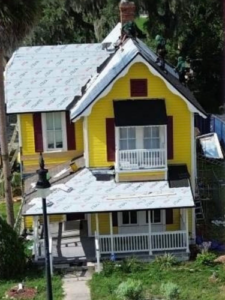
I spent part of this Fourth of July week in St. Augustine, surrounded by weathered stone, shaded courtyards, old wooden doors, fountains, statues, and buildings that have watched generations come and go.
It is almost impossible to walk through St. Augustine without feeling the presence of the people who came before us. History is not tucked away inside a museum there. It is built into the walls, worn into the streets, and growing through the gardens.
Everywhere I looked, I found myself wondering about the stories behind the buildings.
Who first walked through that doorway?
What celebrations took place in that courtyard?
How many families gathered around those tables?
How many businesses began with little more than an idea, a hopeful owner, and the courage to open the door?
Perhaps it is because I am restoring an old building of my own, but I found myself noticing every detail. The patina on a fountain. The unevenness of an old wall. The way a garden softened the edges of a historic structure. The statues, iron gates, tiled walkways, and quiet corners that made each space feel as though it had been collected over time rather than created all at once.
It reminded me that history does not have to be perfect to be beautiful.
In fact, the imperfections are often what make it worth preserving.